







The Mill of the Abbot was built around the year 1000 and is attributable to the figure of Giovanni Gualberto.
In 1036, after various wanderings, he arrived in Vallombrosa and then settled in Passignano, where the Monastery still stands today and had accepted his rule, becoming a symbol of the fight against simony.
It proved to be a suitable place to live according to the Benedictine rule, which invokes the expression “ora et labora” as the basis of the monastic life of Gualberto’s order. He was one of the prominent figures in the history of the Early Middle Ages, not only as the founder of the Vallombrosian order, but also as a promoter of monastic reforms, works of ecclesiastical renewal, and contemplation of the magnificence of nature, cultivating the land, making it productive and maintaining it through work and wisdom. In fact, it is the Abbey of Passignano, where he resided, that has marked over the millennia the agricultural landscape and naturalistic aspect of the entire area. The reforming action of the Monastery introduced, already in the Middle Ages, cultivated trees and rows of vines and olive trees with terracing and hydraulic systems on the slopes.
In this regard, the Mill was the focal point for the milling of grain and wheat, and inside it is still present the coat of arms of the Abbey of Passignano, which has played a role and influence over the centuries that are still a reference point for attraction, tourism, cultural and spiritual development of the entire area.
The historical landscape layout that characterizes this area has been maintained to this day, preserving a clear peculiarity and identity compared to the rest of the municipal territory, becoming part of the protected natural area under theEuropean Convention on Landscape in 2008.
In this regard, it is worth remembering that inside the Monastery of Passignano, works of great value are preserved, including the depiction of the life of Giovanni Gualberto, the recognition of his relics, and the Last Supper painted in 1476 by Domenico del Ghirlandaio surmounted by the lunettes frescoed by Rosselli. After spending his entire life fighting for the freedom of the Church,San Giovanni Gualberto died in the Monastery of Passignano on July 12, 1073. Despite his work, it took 120 years before Gualberto was enrolled in the list of Saints, canonized only in 1193 by Pope Celestine III, and in 1951, Pope Pius XII declared him Patron of the Italian Foresters as well as the Foresters of San Paolo in Brazil.
“Il Mulino” is located in Sambuca Val di Pesa, a small village suspended between Siena and Florence along the course of the Pesa River, a small tributary of the Arno that is worth exploring on foot. After crossing the ancient Romagliano bridge, dating back to the twelfth century, turn right and take the pedestrian path that runs alongside the Pesa River. Continue along the Abate Road, which becomes unpaved and rich in vegetation as you venture into the forest, surrounded by the scents and clear waters of the Pesa.
Along the way, there are traces and testimonies that evoke the history of the Saint to whom the path is dedicated, one of which is the chapel near the Mill. According to tradition, the Chapel is the place where the miraculous stone is housed, where Giovanni Gualberto, loaded with wheat, stopped to rest and find relief from painful sciatica that afflicted him, as revealed by the plaque in the atrium.
The Saint would lie down there in prayer, in pain, leaving the imprint of his body. Today, the path leading to the Mill is one of the most prized areas of the entire Chianti region from a naturalistic point of view, hosting traditional plants and fruits, as well as sensory paths.
What makes the position where the Mulino is located even more unique is its proximity to the Antinori Winery, an architectural masterpiece that has earned first place in the World’s Best Vineyards 2022 ranking as the ‘Most Beautiful Winery in the World’.
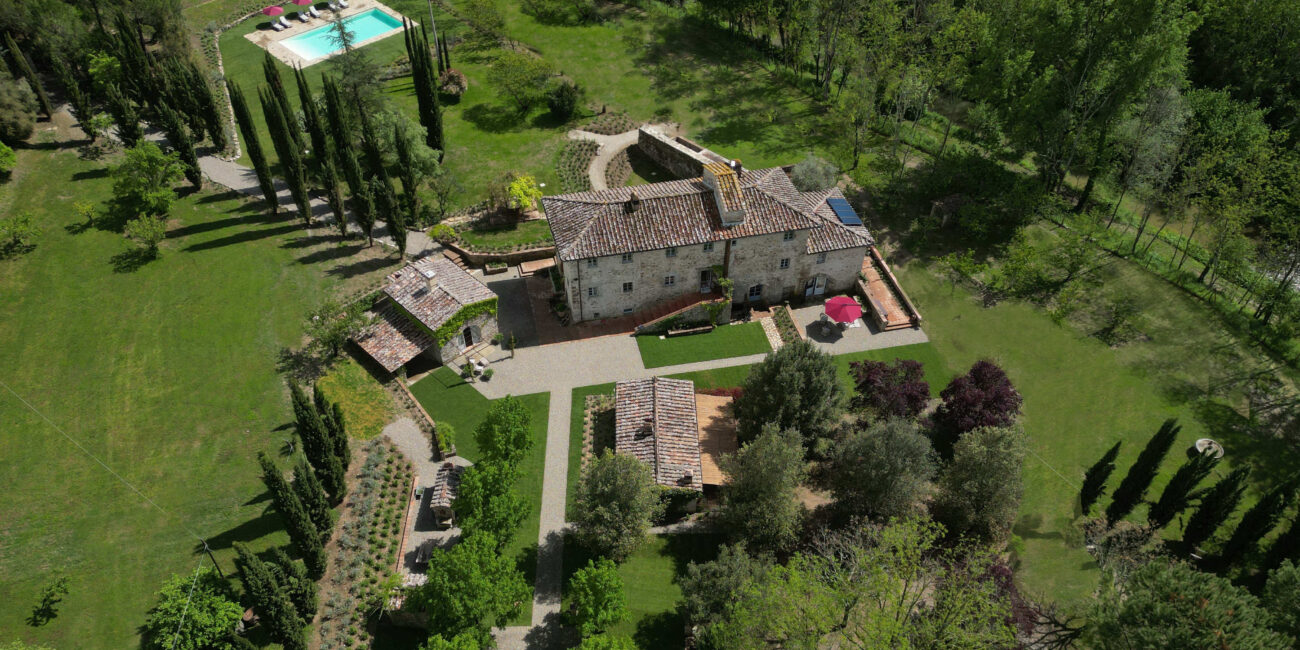
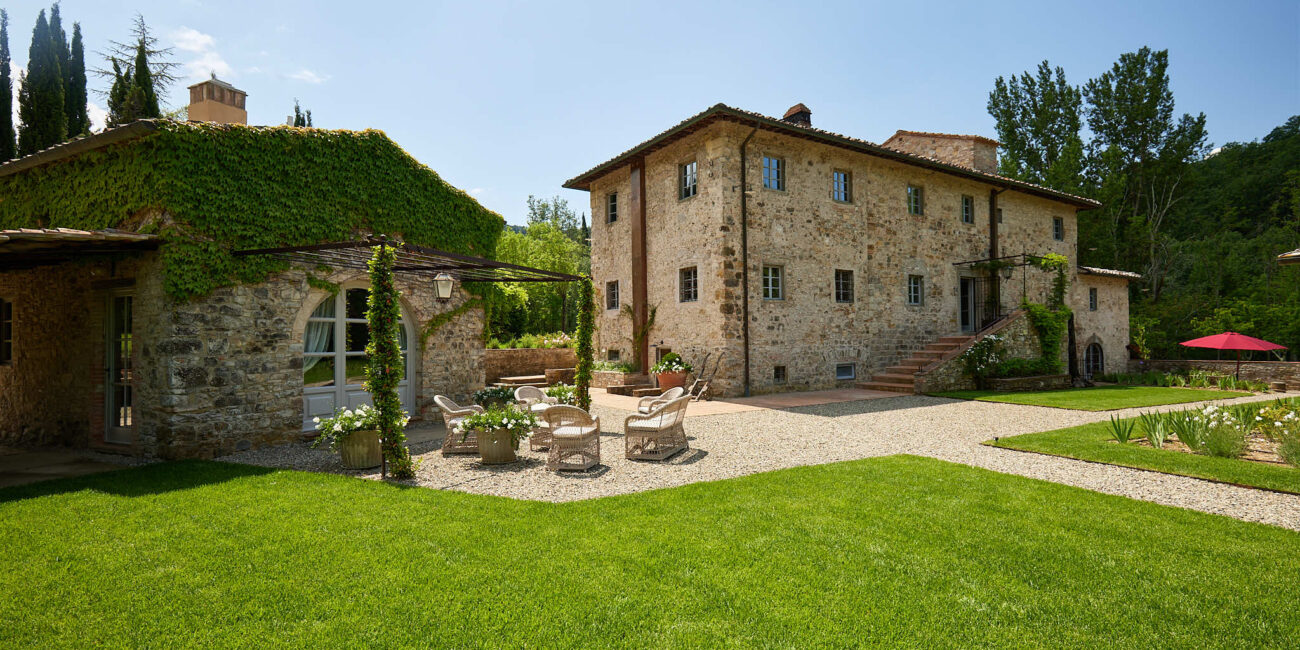
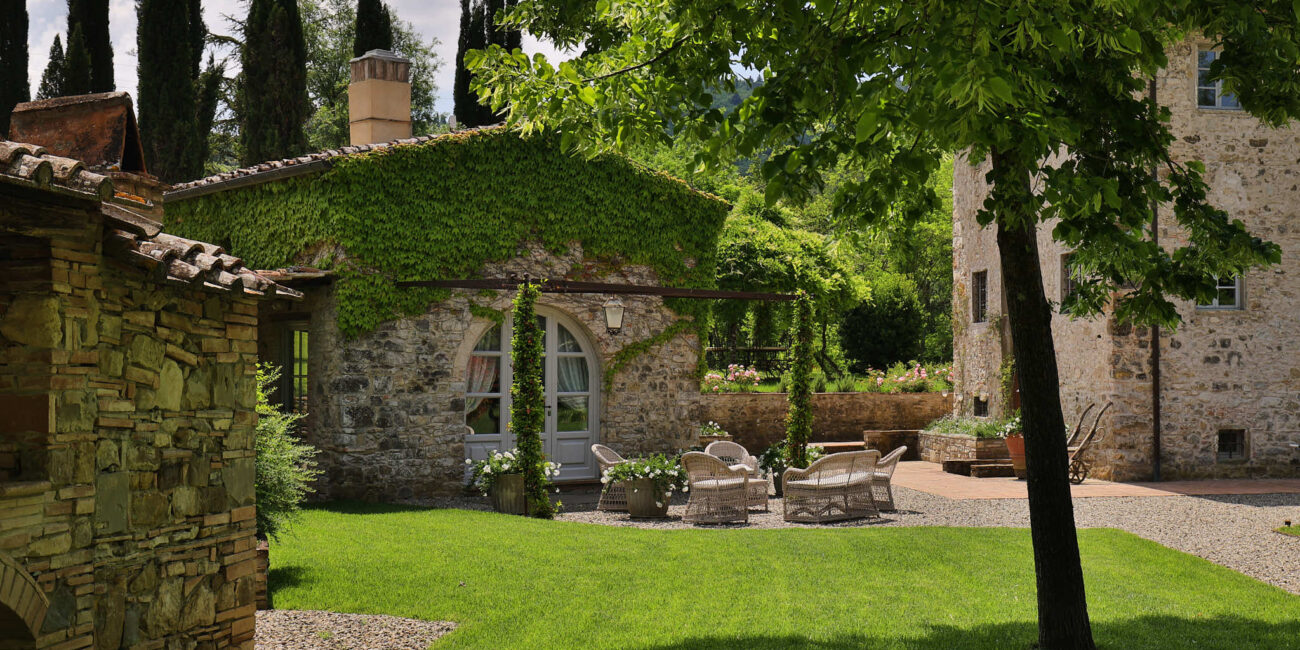
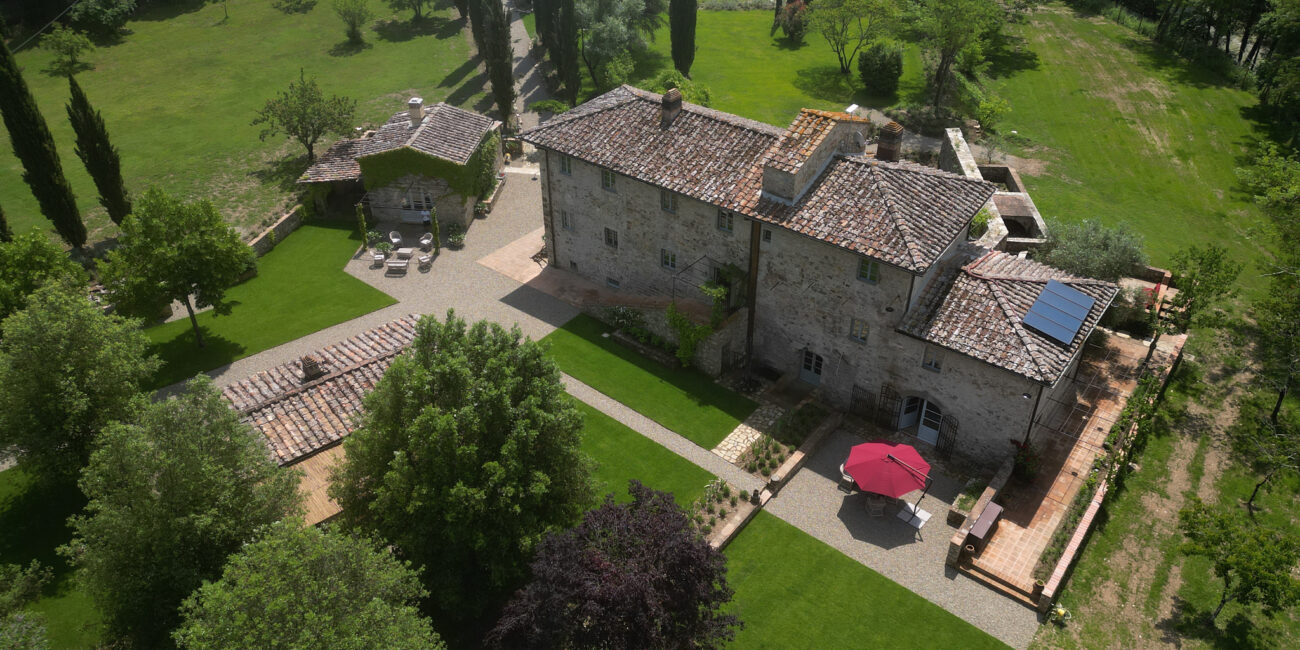
“Il Mulino”, following a meticulous restoration work, consists of a central building and two barns (“Il Rosmarino” and “IlLeccio”) surrounded by lush and colorful vegetation, filled with fragrances, and sounds that make it a truly unique place to connect with nature. The rustling of leaves blends with the sound of the Pesa River like a lullaby that soothes and refreshes.
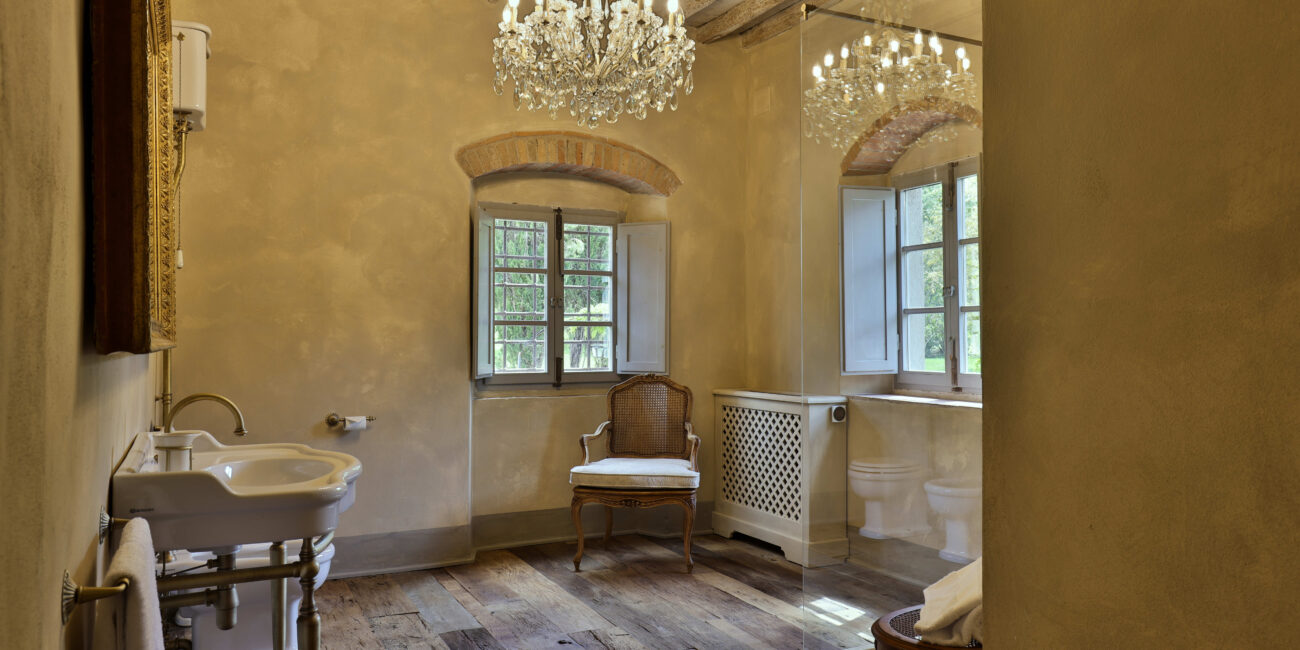
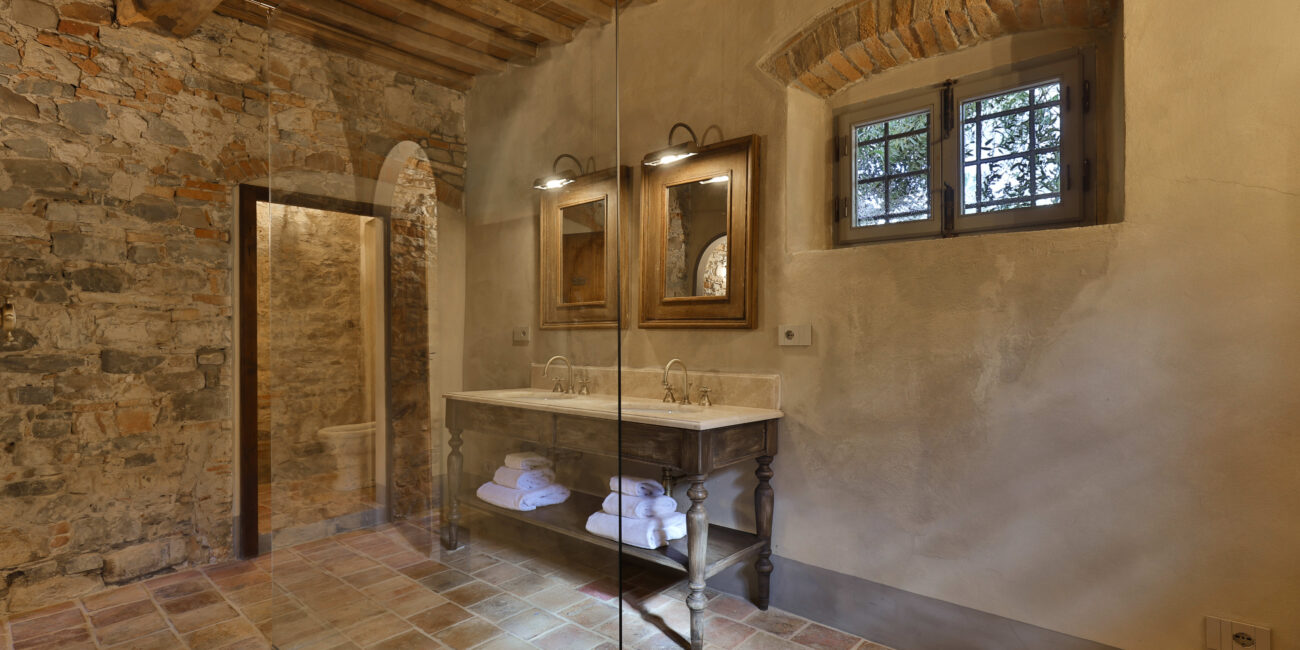
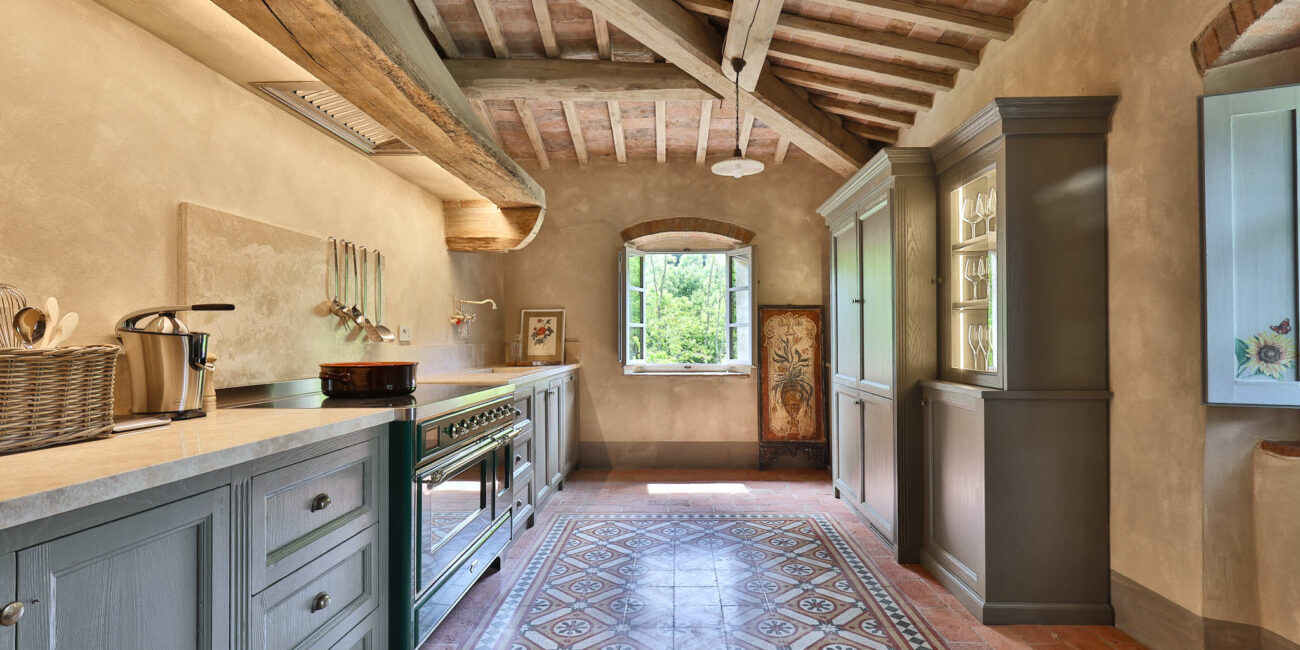
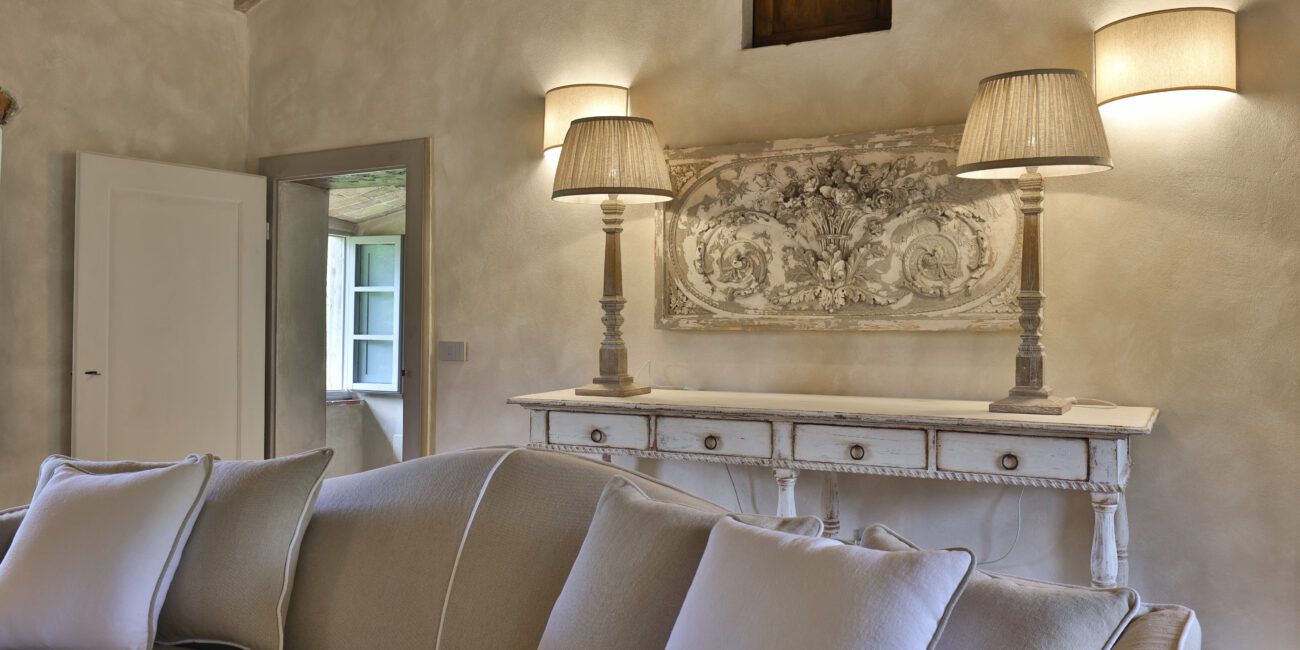
On the ground floor of the Villa, a spacious living room leads to a grand dining room with a fireplace and a bread oven (made even more extraordinary by the presence of a perfectly preserved kitchen dating back to IV century A.D., twin to that found in the Monumental Kitchen of Badia a Passignano), followed by a modern kitchen restored and equipped with all modern conveniences, a bathroom with laundry facilities, and finally the “Antique Room” suite with a large and luxurious private bathroom with travertine shower.
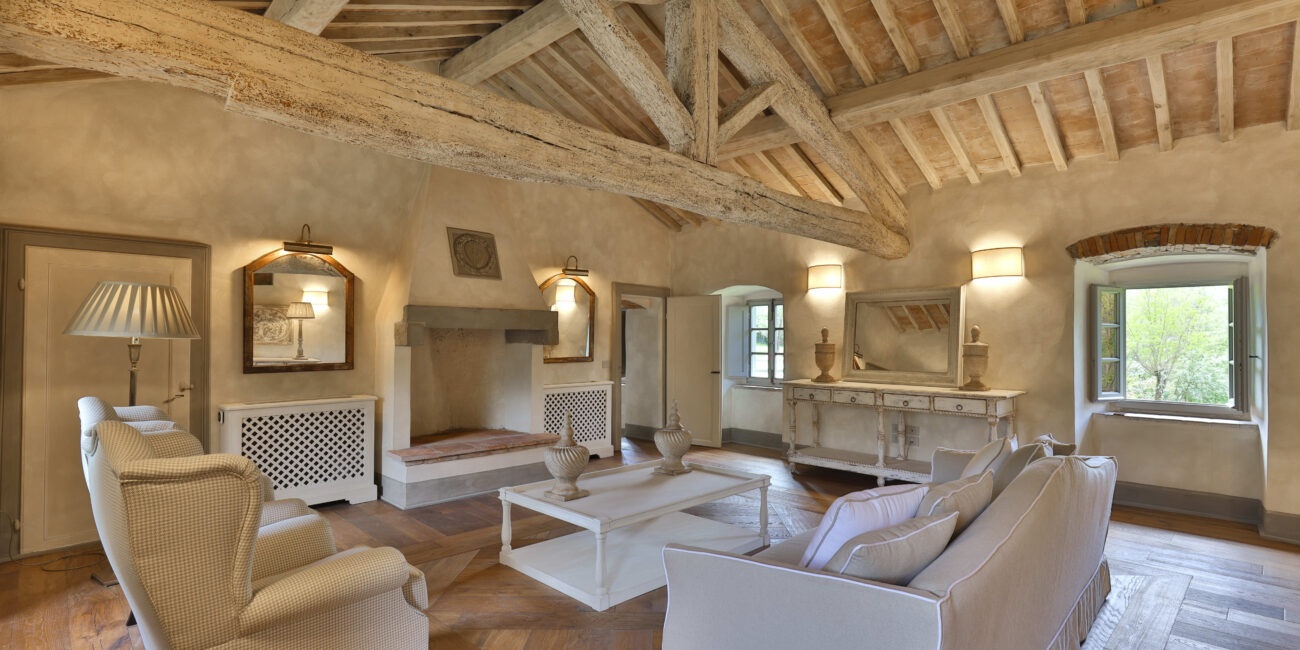
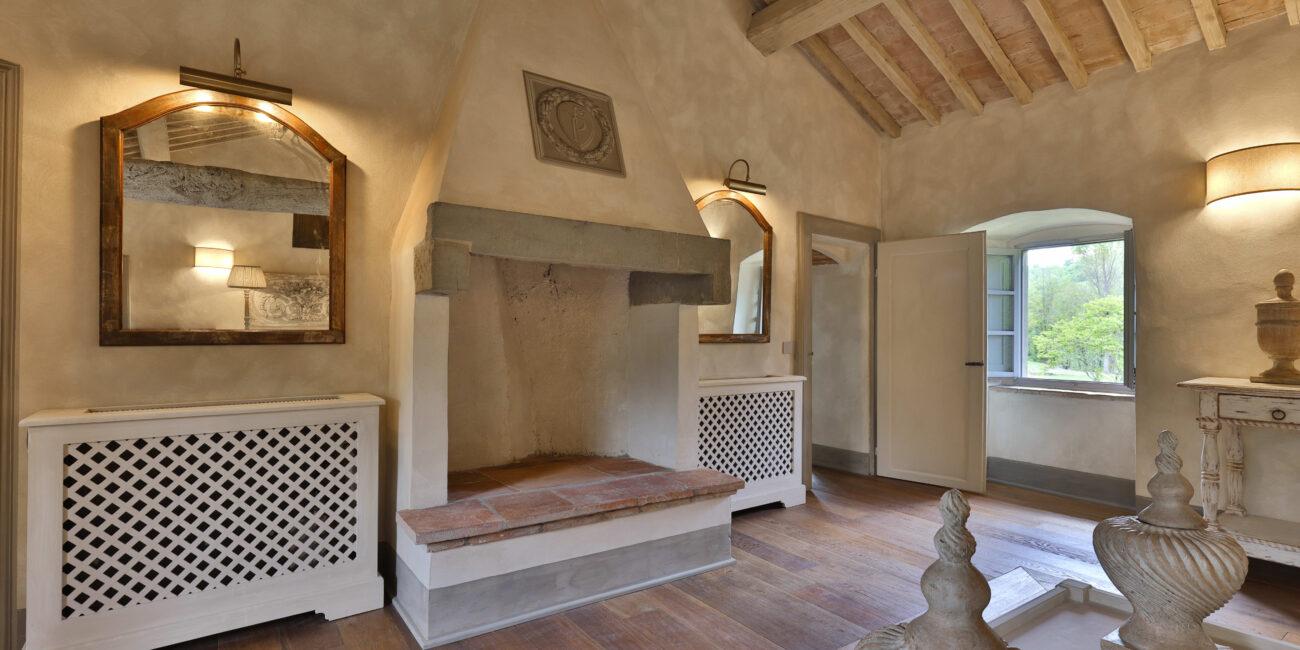
On the first floor, a bright living room dominates the scene with its central truss and a fireplace that makes the atmosphere even more special. From here, you have access to the “I Cipressi” and “Il Susino” suites, both with private bathrooms and travertine showers. The “I Cipressi” suite also features a freestanding bathtub with a panoramic view of the Villa’s garden. Finally, the “Le Macine”suite, located on the garden floor with direct access to an exclusive patio, has been entirely carved out of the ancient mill’s mangerused as a horse rest stop and for grain storage, still visible in the suite’s private bathroom. What makes this room even more special is its proximity to the mill room where the ancient millstones, from which it takes its name, are still present.
The Mills were marvelous machines that represented a technological innovation during the dark centuries of the Middle Ages as they replaced animal labor and assisted man in carrying out heavy and repetitive tasks.
The Mill still present here used a vertical axis mill system on a horizontal wheel that was powered through the opening of aRomanesque channel on the River Pesa, which allowed the water to flow towards the Mill, flooding a basin (where a restored patio now stands) and from there, through the presence of two other channels, the water converged with force under the Mill where the pressure itself allowed the blades of the mills to be activated.
Thanks to the restoration carried out, it is now possible to visit the underground rooms where the mill blades were installed, the channel that acted as a waterway back to the river, and also the original turbine that allowed the Mill to be powered electrically.
Mulino dell’Abate
Strada dell’Abate, 13
Sambuca Val di Pesa 50028
Tavarnelle Barberino
P.Iva 05999340481
e-mail: info@mulinodellabate.it
phone: +39 3382055209